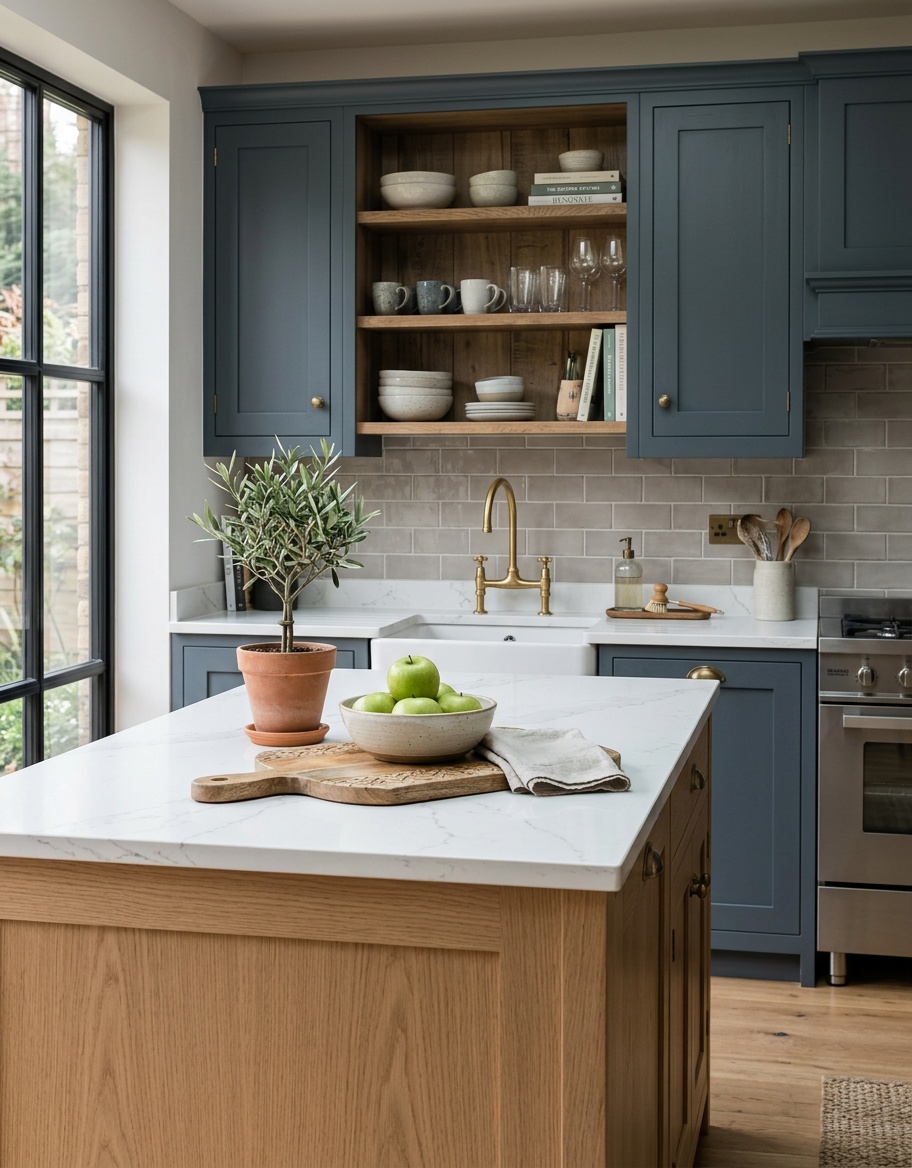
How to Read a Home Improvement Magazine Like a Contractor
Reading time: 14 minutes
Ever flipped through a glossy home improvement magazine and walked away feeling inspired but utterly lost? You’re staring at a stunning kitchen renovation, the numbers look reasonable on paper, and then reality hits: your actual project costs three times the estimate, the timeline doubles, and that “easy weekend project” turns into a three-month saga. Sound familiar?
Here’s the contractor’s secret: those magazines aren’t written for the people swinging the hammer — they’re written for the people dreaming about it. But that doesn’t mean the information is useless. It means you need to read it differently. Strategically. Like someone who’s actually built things.
This guide will rewire how you consume home improvement media, turning aspirational content into actionable intelligence. Whether you’re a first-time homeowner or a seasoned DIYer, you’re about to gain a professional lens that saves you time, money, and a whole lot of frustration.
Table of Contents
- The Contractor Mindset: Why It Changes Everything
- Decoding the Budget Section Like a Pro
- Reading Materials Specs Without Getting Fooled
- Understanding Project Timelines Realistically
- What the Photos Aren’t Telling You
- Separating Lasting Trends from Expensive Fads
- Frequently Asked Questions
- Your Contractor’s Playbook: Building Smarter from Page One
The Contractor Mindset: Why It Changes Everything
A seasoned contractor doesn’t read a home improvement magazine the same way a homeowner does. Where a homeowner sees a beautiful finished bathroom, the contractor sees a sequence of trades, a subfloor condition question, permit requirements, and a materials list that probably forgot to include waterproofing membrane. It’s not cynicism — it’s professional pattern recognition.
According to a 2025 survey by the National Association of Home Builders (NAHB), 67% of homeowners who attempted DIY renovations based primarily on magazine or social media content reported going significantly over budget — with an average overage of 43%. That’s not a small rounding error. That’s potentially thousands of dollars.
The fix isn’t to stop reading magazines. It’s to start reading them as a reference tool rather than a blueprint. Think of every article as a starting point, not a complete plan.
The Three Professional Filters Every Contractor Uses
When a contractor picks up This Old House, Fine Homebuilding, or even a mainstream shelter magazine like Better Homes & Gardens, they instinctively apply three mental filters before absorbing any information:
- The Feasibility Filter: Can this actually be done in the described context? What’s the structural reality?
- The Cost Reality Filter: What’s the real all-in cost, including labor, permits, and contingency?
- The Longevity Filter: Will this choice perform well five or ten years from now, or is it purely aesthetic?
Start applying these three filters consciously and you’ll immediately extract 10x more value from every article you read.
Quick Scenario: The Open-Concept Kitchen Dream
Imagine you’re reading a feature about a stunning open-concept kitchen renovation. The magazine estimates the project at $28,000 and describes it as a six-week transformation. A homeowner reads this and books a contractor. A contractor reads this and immediately asks: Is that wall load-bearing? Did they account for relocated electrical panels? What about HVAC rerouting?
Those questions alone can add $8,000–$15,000 and four additional weeks to the real project. The magazine isn’t lying — it’s just telling you the pretty part of the story. Your job is to ask the questions they didn’t.
Decoding the Budget Section Like a Pro
The budget breakdown is arguably the most-read — and most misunderstood — section of any home improvement feature. Magazine budgets are typically optimistic, geographically averaged, and frequently built on best-case labor scenarios. In 2026, with construction labor costs running approximately 18–22% higher than 2022 levels according to the Bureau of Labor Statistics Construction Wage Index, those vintage magazine estimates need serious recalibration.
Here’s how professionals dissect a published budget:
The Contractor’s Budget Multiplier System
Experienced contractors have an informal rule of thumb when reading magazine budgets: multiply the published cost by the appropriate regional and complexity factor before trusting any number. Here’s a simplified version you can use:
| Project Type | Magazine Estimate | Reality Multiplier | Hidden Cost Factors | Smart Budget Buffer |
|---|---|---|---|---|
| Full Kitchen Remodel | $25,000–$45,000 | 1.3x–1.6x | Plumbing relocation, permits, disposal | +20% contingency |
| Bathroom Renovation | $10,000–$20,000 | 1.4x–1.7x | Waterproofing, mold remediation, tile labor | +25% contingency |
| Deck Addition | $8,000–$18,000 | 1.2x–1.5x | Footings, permits, ledger flashing | +15% contingency |
| Basement Finishing | $20,000–$35,000 | 1.3x–1.8x | Moisture issues, egress windows, HVAC | +30% contingency |
| Exterior Siding Replacement | $12,000–$22,000 | 1.2x–1.4x | Sheathing damage, trim details, flashing | +15% contingency |
Pro Tip: Always add your contingency after applying the reality multiplier, not to the original magazine figure. This is where most homeowners make their critical budgeting mistake.
Also, watch for what the budget section omits entirely. In 2026, with tightened permitting processes in most U.S. municipalities, permit fees for significant renovations can range from $500 to $3,500 depending on your location — a cost almost never mentioned in glossy magazine features.
Reading Materials Specs Without Getting Fooled
Materials coverage is where home improvement magazines genuinely shine — and where homeowners most commonly get tripped up. The photography is seductive. The product descriptions sound straightforward. But a contractor reads materials specs with an entirely different vocabulary.
Consider this real-world example from 2025: A popular design magazine featured a gorgeous bathroom with large-format porcelain tile (24″x48″ slabs) described as a “moderately priced upgrade” at $6–$9 per square foot. What the article didn’t mention? Installing large-format tile requires a perfectly level substrate (often requiring self-leveling compound), specialized large-format adhesive, a wet saw capable of handling the size, and significantly more skilled labor — easily adding $12–$18 per square foot in labor alone. The tile itself was the minor cost.
Material Categories Contractors Evaluate Differently
Here are the specific material categories where professional interpretation diverges most sharply from magazine presentation:
- Flooring: Magazines list material cost. Contractors think about subfloor prep, transition strips, moisture barriers, and the 10–15% waste factor for cuts. Always add these.
- Cabinetry: “Semi-custom” means different things to different manufacturers. Ask specifically about box construction (plywood vs. particleboard), dovetail joints, and soft-close hardware inclusion.
- Windows: Energy ratings (U-factor and SHGC) matter enormously for long-term utility costs. Magazines love aesthetics; contractors love performance specs. In 2026, with energy costs averaging 14% higher than 2023, this matters more than ever.
- Insulation: R-value is only part of the story. Air sealing, thermal bridging, and moisture management are equally critical but almost never discussed in mainstream features.
- Paint: The brand and finish type matter less than surface prep. A $80 gallon of paint on a poorly prepped surface will fail faster than $30 paint on a properly primed wall.
The Durability Question Magazines Rarely Ask
Every time you see a material featured, train yourself to ask: How does this perform after five years of real use? Quartz countertops photograph beautifully and resist most staining — a good long-term choice. Unlacquered brass fixtures look stunning on day one but require significant maintenance that most homeowners underestimate. White oak hardwood floors are gorgeous but show scratches more readily than site-finished alternatives in high-traffic areas.
The National Kitchen and Bath Association (NKBA) reported in early 2026 that material durability is now the #1 priority for homeowners planning renovations, overtaking aesthetics for the first time in the survey’s history. Contractors have always thought this way. Now you can too.
Understanding Project Timelines Realistically
Magazine timelines are perhaps the most optimistic element of any renovation feature. “Six-week kitchen transformation” assumes zero supply chain delays, a contractor with no other active projects, perfect existing conditions behind the walls, and an owner who makes decisions instantly. In the real world of 2026, that six-week project commonly runs ten to fourteen weeks.
Here’s the contractor’s honest breakdown of where time actually goes:
- Design and planning phase: Magazines skip this entirely. Budget 4–8 weeks minimum for decisions, revisions, and ordering.
- Permitting: In major metros in 2026, permit approvals average 3–6 weeks for significant renovations.
- Lead times: Custom cabinetry still runs 8–14 weeks. Specialty tile can be 6–10 weeks. These don’t pause your life.
- Inspection windows: Framing, rough electrical, rough plumbing — each requires an inspector visit, often with 3–7 day scheduling windows.
- Weather delays (exterior work): Add 15–25% to any exterior timeline.
The real contractor math: Take the magazine timeline, double it, then add two weeks. If the project comes in faster, you’ll be pleasantly surprised. If it takes that long, you won’t be devastated.
What the Photos Aren’t Telling You
Professional photography in home improvement magazines is a masterclass in strategic framing. The images are stunning precisely because photographers know what to include — and what to keep out of frame. Learning to read what isn’t shown is a critical contractor skill.
Consider what’s almost never photographed: the mechanical room, the utility connections, the transition between new flooring and existing hallway floors, the view from the doorway into the adjacent un-renovated room, or the window that faces the neighbor’s brick wall. These are real considerations that affect how a design functions in an actual home.
The Staging Reality Check
Magazine-featured homes are styled by professional stagers using furniture and accessories specifically chosen for the shoot. According to Houzz’s 2025 U.S. Renovation Trends Report, 78% of homeowners reported that completed renovations looked different from magazine inspiration photos once they added their own furnishings. This isn’t a failure — it’s an unrealistic comparison point.
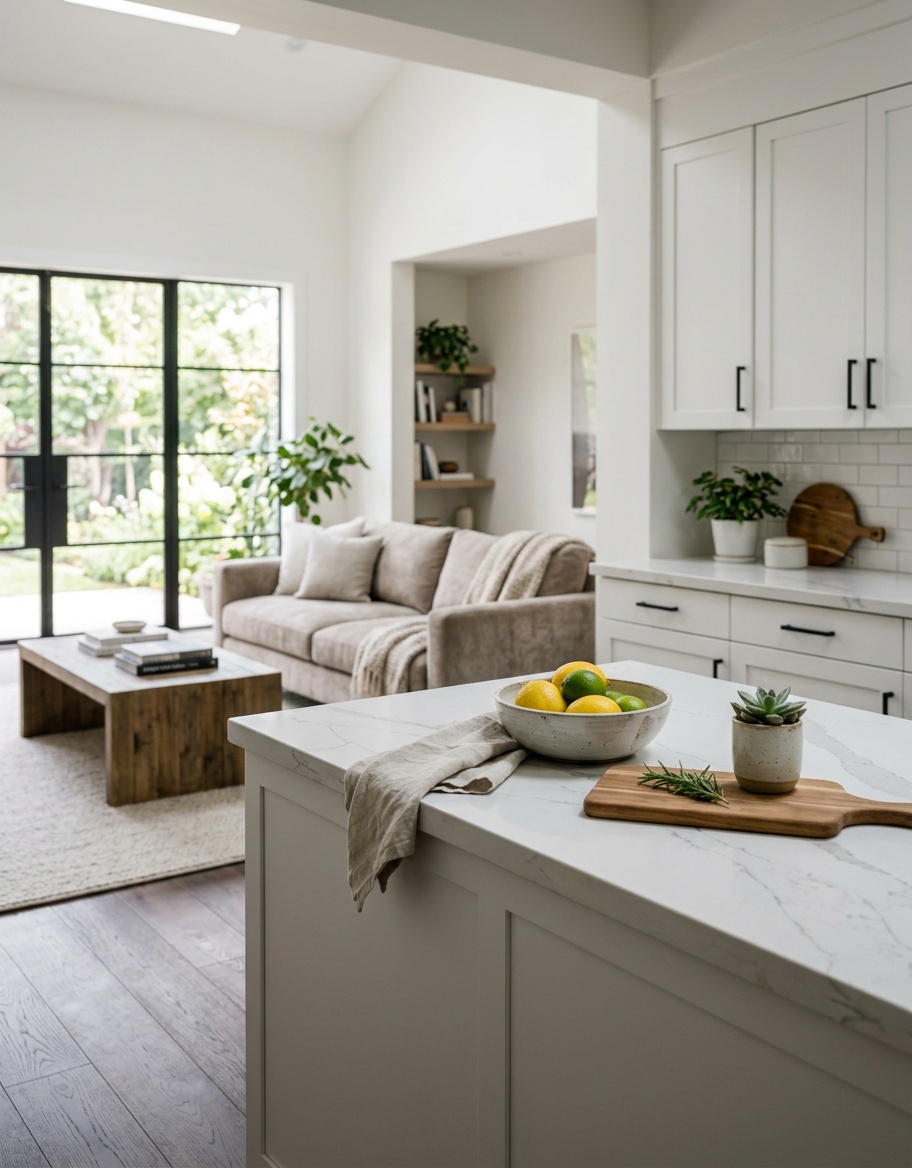
A contractor looks at those photos and mentally strips away the styling to evaluate the bones: the proportion of the space, the functionality of the layout, the quality of the craftsmanship visible in the trim details and transitions. Practice doing the same. Look past the artful bowl of lemons on the marble island and ask: How does the workflow function? Where are the outlets? Is there adequate storage beyond what’s visible?
Reading the Credits Section Strategically
Most readers flip past the credits page. Contractors read it carefully. The credits tell you who actually built it (often a high-end custom firm), where the products were sourced (frequently trade-only suppliers), and what location the home is in (which affects code requirements, climate considerations, and local material costs dramatically). A kitchen built in Scottsdale, Arizona has completely different moisture and thermal considerations than one built in Portland, Oregon or Boston, Massachusetts.
Separating Lasting Trends from Expensive Fads
One of the most valuable skills a contractor brings to magazine reading is an intuitive sense of which trends have staying power and which will look dated in three years. This matters enormously when you’re making renovation decisions that affect both your daily life and your home’s resale value.
Here’s a data visualization comparing the longevity outlook for current 2026 home improvement trends, based on contractor surveys and design industry forecasting:
2026 Home Improvement Trend Longevity Index (Contractor Ratings)
Source: 2026 Contractor Trend Durability Survey (n=312 licensed contractors)
The contractor’s rule of thumb: if a trend requires significant structural changes to achieve, it needs to be a long-term commitment, not a response to this season’s magazine spread. If it’s an aesthetic layer (paint color, hardware, light fixtures) that can be updated affordably, experimentation is fine. Gut your bathroom for a specific tile pattern only if you’d still love it in a decade.
Case Study: The Shiplap Story
Shiplap wall paneling exploded in popularity around 2015, driven by television renovation shows and magazine features. Contractors who worked through that cycle watched homeowners invest $4,000–$12,000 in shiplap installations that some are now removing or painting over. The problem wasn’t the material — it’s a perfectly functional wall treatment. The problem was that many homeowners made structural decisions based on trend momentum rather than personal long-term preference.
In 2026, the equivalent pressure trend is limewash paint finishes and terracotta tile. Both are genuinely beautiful. Both are currently everywhere in shelter media. A contractor reading those features asks: Will this client love this in 2031? You should ask yourself the same question.
Frequently Asked Questions
Are home improvement magazine estimates ever accurate, or should I always expect to pay more?
Magazine estimates can be directionally useful but are rarely precise for your specific situation. They’re typically based on national average labor rates and don’t account for regional cost variations, your home’s specific existing conditions, or permit costs. As a reliable practice: treat any published budget as a minimum baseline, apply the appropriate regional multiplier (major metros like New York, San Francisco, and Seattle routinely run 40–60% above national averages in 2026), and add a 20–30% contingency buffer. If your contractor’s quote aligns with a magazine estimate without adjustment, ask them specifically what they’ve included in the scope — something may be missing.
Which home improvement magazines do contractors actually recommend for technical accuracy?
Fine Homebuilding is the unanimous favorite among professional contractors for technical depth and accuracy — it’s written by and for building professionals, not just aspirational homeowners. This Old House strikes a strong balance between accessibility and technical credibility. For kitchen and bath projects specifically, Kitchen & Bath Design News offers trade-level insight. For mainstream shelter magazines like Architectural Digest or House Beautiful, use them as visual inspiration only — treat their project specs and budgets with significant skepticism and always verify independently.
How can I use magazine features to have better conversations with my contractor?
Bring the magazine as a communication tool, not a contract. Show your contractor the photos you’re inspired by and ask them to identify the specific elements you’re responding to — is it the color palette, the layout, the material choices, or the overall aesthetic? This helps separate the achievable from the aspirational. Also use the article to frame questions: “This feature shows a waterfall countertop edge — what does that typically add to cost and does it make sense for my kitchen?” A good contractor will appreciate a client who arrives prepared with specific reference points. It dramatically shortens the communication gap and reduces costly change orders later.
Your Contractor’s Playbook: Building Smarter from Page One
Reading home improvement media like a contractor isn’t about deflating your dreams — it’s about making those dreams structurally sound. The information in those magazines is genuinely valuable when filtered through a professional lens.
Here’s your immediate implementation checklist:
- ✅ Apply the three filters (Feasibility, Cost Reality, Longevity) to every project feature you read
- ✅ Multiply published budgets by your regional factor and add your contingency after that adjustment
- ✅ Read the credits page to understand the project’s real context — location, builder tier, and product sourcing
- ✅ Strip the staging mentally and evaluate layouts, workflows, and craftsmanship details rather than furniture arrangements
- ✅ Ask the longevity question for every trend — would you still love this in five or ten years?
- ✅ Subscribe to at least one trade-level publication like Fine Homebuilding alongside your shelter magazines
- ✅ Use photos as conversation starters with professionals, not as precise project specifications
As the renovation industry continues to evolve in 2026 — with AI-assisted design tools, increasingly sophisticated prefabricated components, and growing emphasis on energy performance — the gap between aspirational media and construction reality will only grow more complex to navigate. The homeowners who thrive are those who learn to bridge that gap with professional thinking.
Here’s the question worth sitting with: The next time you pick up a home improvement magazine, will you read it the same way? Or will you flip to the budget section first, read the credits before the feature, and look past the lemons on the marble island to ask what’s really being built?
You now have the lens. The next renovation decision you make — whether it’s a backsplash refresh or a full addition — will be sharper, smarter, and far less likely to surprise you in the worst possible way. That’s not just contractor thinking. That’s the foundation of a home that works as beautifully as it photographs.
About the Author
