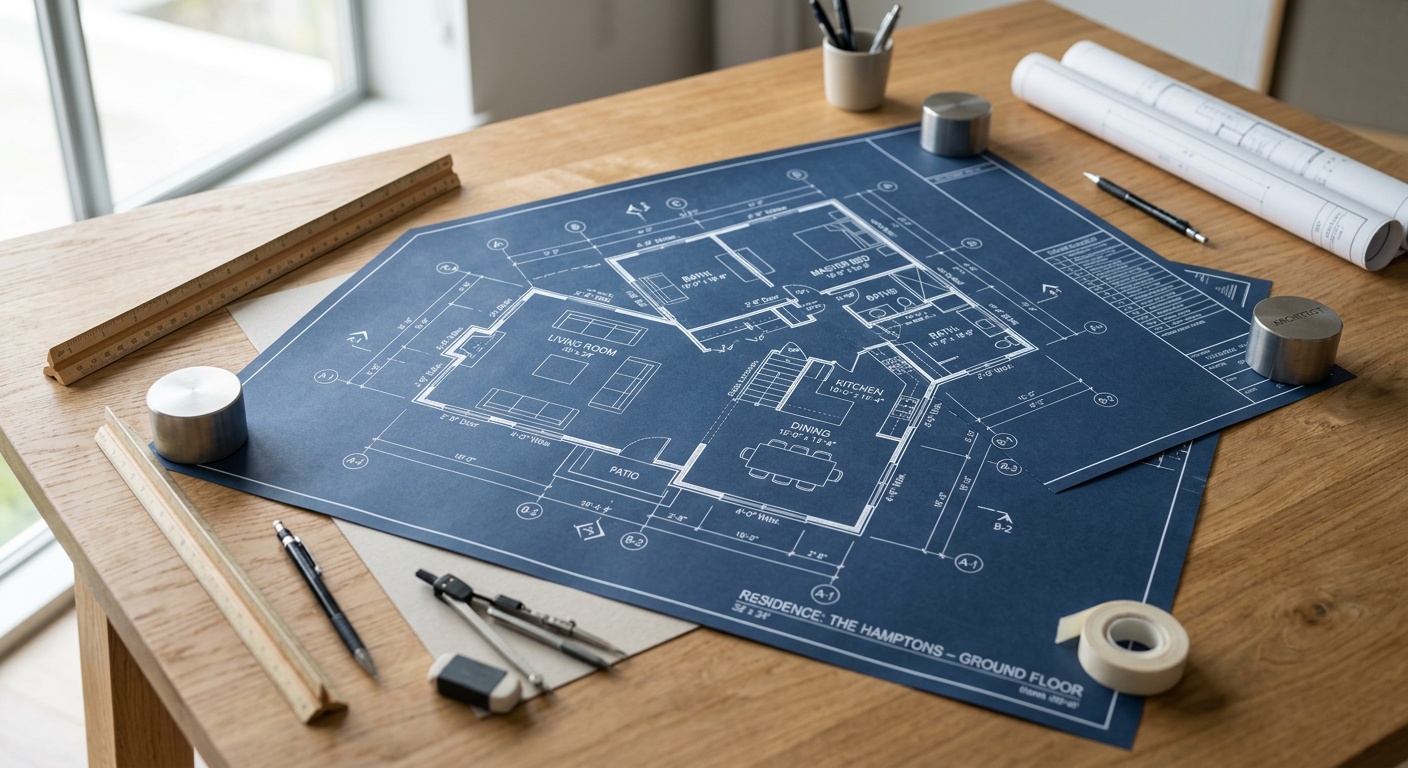
How to Scope a Renovation Project Before Breaking Ground
Reading time: 14 minutes
Ever watched a renovation project spiral from a tidy budget into a financial nightmare? You’re not alone. In 2026, the average home renovation project exceeds its original budget by 34%, according to the National Association of Home Builders’ most recent survey. That’s not just a number — that’s a dream bathroom turning into a half-finished disaster that sits behind a locked door for six months.
The good news? Most of those cost overruns, delays, and contractor headaches are entirely preventable. The secret isn’t hiring the most expensive project manager or having the biggest renovation budget. It’s doing the foundational work that most homeowners skip — scoping your project before a single wall comes down.
This guide is your strategic roadmap for turning renovation chaos into a well-executed plan. Whether you’re tackling a kitchen gut-renovation, an accessory dwelling unit (ADU) addition, or a full-house refresh, the principles here will save you time, money, and more than a few sleepless nights.
Table of Contents
- What Does “Scoping a Renovation” Actually Mean?
- Why Pre-Project Scoping Matters More Than Ever in 2026
- The Step-by-Step Scoping Framework
- 3 Common Scoping Challenges (and How to Overcome Them)
- Renovation Scope Comparison: DIY vs. Professional Scoping
- What Eats Your Renovation Budget: A Visual Breakdown
- Real-World Examples: Scoping Done Right (and Wrong)
- Frequently Asked Questions
- Your Pre-Ground-Breaking Checklist: Break Ground with Confidence
What Does “Scoping a Renovation” Actually Mean?
Scoping a renovation project means defining — in precise, documented detail — exactly what work will be done, how it will be done, who will do it, how much it will cost, and how long it will take. Think of it as writing the screenplay before the cameras roll. No serious film production starts shooting without a complete script, and no serious renovation should begin without a complete scope of work.
A scope of work (SOW) is more than a wish list. It’s a living document that encompasses:
- Physical boundaries — Which rooms, walls, or systems are included (and explicitly excluded)
- Material specifications — The exact tile, lumber grade, fixture model, and finish you’ve chosen
- Labor definitions — Who is responsible for each task: general contractor, subcontractor, or homeowner
- Permitting requirements — Which aspects of the work require municipal approval
- Timeline milestones — Key checkpoints and anticipated completion dates
- Contingency provisions — A formal plan for handling unforeseen conditions
Without these elements locked in writing before work begins, you’re essentially handing a contractor a blank check and hoping for the best. With them, you have a legally defensible, financially predictable framework that protects everyone involved.
Why Pre-Project Scoping Matters More Than Ever in 2026
The renovation landscape in 2026 is uniquely challenging. Material costs, while slightly more stable than the post-pandemic spikes of 2022–2024, remain elevated. Labor shortages continue to plague the skilled trades sector — the Associated General Contractors of America reported in early 2026 that 73% of construction firms are struggling to fill craft worker positions. Meanwhile, municipal permitting offices in major metros are running 8–16 week backlogs.
In this environment, every ambiguity in your project definition costs money. A vague scope invites scope creep — that insidious process where small additions accumulate until your project is unrecognizable from the original plan. It also creates fertile ground for contractor disputes, change order markups (which often carry 15–25% premiums), and scheduling delays that ripple through your entire timeline.
Beyond the financial argument, thorough scoping is increasingly important for homeowners navigating the ADU boom. With accessory dwelling units now permitted in most California, Oregon, and Washington municipalities — and with many mid-Atlantic states adopting similar zoning reforms in 2025 — millions of homeowners are attempting complex structural projects for the first time. The complexity of these projects makes pre-ground-breaking scoping not just helpful, but essential.
“The single biggest predictor of a successful renovation is the quality of the scope document, not the size of the budget. I’d rather manage a $50,000 project with a great scope than a $500,000 project with a vague one.” — Maria Chen, Senior Project Manager at Meridian Build Group, Chicago (2026)
The Step-by-Step Scoping Framework
Step 1: Define Your Vision and Non-Negotiables
Before you talk to a single contractor or pull a single permit, get crystal clear on what you want — and what you absolutely cannot compromise on. This isn’t the time for Pinterest boards (well, not exclusively). This is the time for structured thinking.
Ask yourself these foundational questions:
- What problem is this renovation solving? (Lack of space, outdated systems, safety concerns, resale value?)
- If the budget gets tight, what are the must-haves versus the nice-to-haves?
- What is the intended lifespan of this renovation? (5 years before resale vs. 20+ years of personal use)
- Are there household members whose needs create specific design requirements? (Aging-in-place features, accessibility, young children)
Write down your answers. Literally. This document becomes the north star when decision fatigue sets in at week six of a major renovation — and it will.
Step 2: Conduct a Thorough Existing Conditions Assessment
This is where most homeowners shortchange themselves. Before any design work happens, you need to understand what you’re working with. Hidden conditions — old knob-and-tube wiring, asbestos in 1970s floor tiles, inadequate subfloor framing — are responsible for the majority of renovation budget overruns.
A proper existing conditions assessment includes:
- Structural evaluation: Consult a structural engineer if you’re removing walls, adding second-story loads, or modifying roof lines. In 2026, structural engineering consultation fees typically run $500–$1,500 for residential projects — cheap insurance against catastrophic surprises.
- Mechanical, Electrical, and Plumbing (MEP) audit: Have a licensed electrician and plumber assess the current systems. Upgrading a service panel that was never on your radar can add $8,000–$15,000 to a project.
- Hazardous materials testing: Homes built before 1980 should be tested for asbestos and lead paint before any demolition. Remediation costs vary widely but can reach $20,000+ in severe cases.
- Moisture and mold inspection: Particularly in bathrooms, basements, and exterior walls, moisture damage discovered mid-project can halt work for weeks.
Pro Tip: Many contractors will perform a preliminary walkthrough assessment for free or at low cost as part of the bidding process. However, for complex projects, consider hiring an independent building inspector specifically for a pre-renovation assessment — their only loyalty is to you.
Step 3: Build Your Budget Architecture
A renovation budget isn’t a single number — it’s a structured architecture with multiple components. Here’s how to build one that actually holds:
Layer 1: Hard Costs — Materials and labor. Get itemized estimates, not lump sums. A contractor who won’t break down their bid by line item is a contractor you should approach with caution.
Layer 2: Soft Costs — Design fees, permit fees, engineering fees, and inspections. In 2026, permit fees in major metro areas have increased significantly; budget 1–3% of total project cost for permitting alone in cities like Austin, Denver, or Seattle.
Layer 3: Owner-Supplied Items — Appliances, fixtures, and specialty items you purchase directly. This is where you can often save 10–20% compared to contractor-supplied items, but it also shifts responsibility for coordination and timely delivery to you.
Layer 4: Contingency Reserve — Not a wishful afterthought, but a budgeted line item. For projects in homes over 30 years old, budget a minimum 20% contingency. For newer homes or cosmetic-only projects, 10–15% is appropriate. This is non-negotiable.
Step 4: Develop the Written Scope of Work
Now, synthesize everything from the previous steps into a formal scope document. The more granular, the better. Instead of writing “remodel kitchen,” write:
“Demolish existing kitchen cabinets, countertops, and soffit. Install 22 linear feet of new semi-custom shaker cabinets per Kitchen Design Plan Rev. 3, dated March 15, 2026. Install 25 square feet of quartz countertop (Silestone ‘Eternal Calacatta Gold,’ 3cm). Install undermount stainless steel sink (Kraus KHU100-32). Relocate existing 20-amp circuit for refrigerator to north wall per electrician’s plan…”
That level of specificity eliminates ambiguity, enables apples-to-apples contractor comparisons, and provides legal protection if disputes arise.
Step 5: Map the Permitting and Approvals Pathway
Permit requirements vary dramatically by jurisdiction, but as a general rule: anything affecting structural elements, electrical systems, plumbing, HVAC, or egress requires a permit. In 2026, many municipalities have moved to digital permitting platforms, which can accelerate approvals — but you need to submit the right documents from the start.
Before finalizing your scope, contact your local building department (or have your contractor do so) to confirm:
- Which specific elements of your project require permits
- What documentation is required for submission (engineered drawings, material specifications, energy compliance reports)
- Current processing timelines
- Whether your project triggers any zoning variance requirements
Failing to pull required permits doesn’t just risk fines — it can make your home uninsurable, unsellable, and can require you to tear out completed work. It’s a risk not worth taking.
3 Common Scoping Challenges and How to Overcome Them
Challenge 1: “I Don’t Know What I Don’t Know” — The Hidden Conditions Problem
This is the most universal renovation challenge. You can’t scope what you can’t see. The solution is to proactively invest in discovery before committing to a fixed-price contract. Open up walls in targeted areas during the bidding phase (with contractor coordination), conduct all assessments described in Step 2, and build your contingency reserve specifically to absorb discovery costs.
Some savvy homeowners in 2026 are also leveraging thermal imaging and endoscopic camera inspections — services now offered by many home inspection firms — to “see inside” walls before demolition begins. At $300–$600 per inspection, it’s an investment that can surface thousands in potential surprises.
Challenge 2: Scope Creep from Design Evolution
You start with a bathroom renovation. Then you decide the adjoining closet should be reconfigured. Then you realize the hallway lighting looks outdated by comparison. Before you know it, you’ve added 40% to your project and your contractor is presenting change orders weekly.
The antidote is a formal change order protocol established before work begins. Define in your contract that any scope modification — regardless of size — requires a written change order approved by both parties before work proceeds. This creates a pause-and-reflect moment that filters out impulsive additions and ensures every change is a conscious, budgeted decision.
Challenge 3: Misalignment Between Homeowner Vision and Contractor Interpretation
Even the most experienced contractors are not mind readers. A homeowner who says “high-end finishes” might mean $50-per-square-foot tile; the contractor might interpret it as $15-per-square-foot. These interpretation gaps compound across dozens of decisions and create the conditions for both disappointment and disputes.
The solution is visual specification. For every major design decision, provide a physical sample, a specific product model number, or a detailed photograph of the intended result. In 2026, virtual reality design tools from platforms like Houzz Pro and Autodesk’s residential suite make it easier than ever to create visual specifications that leave nothing to interpretation.
Renovation Scope Comparison: DIY vs. Professional Scoping
| Factor | DIY Scoping | Professionally Scoped |
|---|---|---|
| Upfront Cost | $0–$500 | $1,500–$8,000 |
| Budget Accuracy | ±35–50% variance typical | ±10–15% variance typical |
| Permit Compliance | Higher risk of gaps | Typically comprehensive |
| Contractor Bid Quality | Vague, non-comparable bids | Itemized, comparable bids |
| Best Suited For | Cosmetic, low-complexity projects | Structural, multi-trade, complex projects |
What Eats Your Renovation Budget: A Visual Breakdown
Based on 2026 NAHB data for mid-range full kitchen renovations, here’s where the money typically goes — and where surprises tend to strike:
Source: NAHB 2026 Cost vs. Value Report (mid-range kitchen renovation, national average)
Real-World Examples: Scoping Done Right (and Wrong)
Case Study 1: The $180,000 Bathroom That Started at $65,000
In early 2025, a homeowner in suburban Boston began what they described as a “master bathroom upgrade” with a verbal agreement and a contractor’s rough estimate of $65,000. No formal scope document was created. Six months later, the project closed at $182,000.
What happened? The absence of a scope document meant the contractor and homeowner had fundamentally different assumptions about nearly everything: the quality tier of tile, whether the project included the adjoining dressing room, and who was responsible for an unexpected rotted subfloor discovered during demolition. Each gap was resolved through change orders, each carrying a 20% markup. The homeowner’s contingency reserve was zero, meaning each change order came as a financial shock.
The lesson isn’t that the contractor was dishonest — they weren’t. The lesson is that ambiguity is expensive, and it compounds.
Case Study 2: The ADU Project That Came in On Budget
Contrast that with a 2025 project in Portland, Oregon: a homeowner adding a 650-square-foot accessory dwelling unit to their backyard. Working with a design-build firm that specialized in ADUs, they spent eight weeks in pre-construction scoping before a single permit was filed. The process included structural engineering, a geotechnical soil report (required by Portland’s permitting office), complete construction drawings, material specifications down to the outlet covers, and a 15% contingency reserve built into the contract.
The project came in at $287,000 — just $9,000 over the budgeted $278,000, with the overage entirely absorbed by the contingency reserve. On completion, the ADU was permitted to rent immediately, generating $2,100/month in rental income. The homeowner credits the outcome entirely to the rigor of the pre-construction process.
The takeaway? Eight weeks of scoping work paid dividends for twenty years of asset performance.
Frequently Asked Questions
How long does the scoping process typically take for a mid-size renovation?
For a mid-size project — say, a kitchen remodel or bathroom addition in the $50,000–$150,000 range — expect the scoping process to take four to eight weeks if done properly. This includes time for design development, contractor bid solicitation (you should get at least three itemized bids), permitting research, and document finalization. Resist the pressure to rush this phase. Contractors who push you to sign a contract before the scope is fully developed are often motivated by their own scheduling needs, not yours. Every week spent on thorough scoping can save weeks of mid-project chaos.
Do I need a professional project manager or architect to scope my renovation?
Not necessarily — but it depends heavily on project complexity. For cosmetic or single-trade projects (painting, flooring replacement, basic fixture swaps), a well-organized homeowner can create an adequate scope with research and careful documentation. For anything involving structural changes, multiple trades working simultaneously, historical homes with potential code upgrade triggers, or projects over $75,000, professional involvement pays for itself. In 2026, a qualified owner’s representative or project manager typically charges 5–10% of construction costs and routinely saves clients 15–25% through competitive bidding management and change order control alone.
What happens if unforeseen conditions arise even after thorough scoping?
Even the most thorough scoping cannot eliminate all uncertainty — it can only minimize it. This is precisely why a formal contingency reserve is non-negotiable, not optional. When unforeseen conditions arise (and on any project over $50,000, some probability exists that they will), your scope document serves two critical functions. First, it defines the baseline against which any change is measured, ensuring that contractors cannot use the discovery as an opportunity to inflate unrelated costs. Second, your pre-established change order protocol ensures that responses to unforeseen conditions are evaluated, approved, and documented before remediation begins — preventing a $5,000 discovery from quietly becoming a $20,000 resolution.
Your Pre-Ground-Breaking Checklist: Break Ground with Confidence
You now have a complete strategic framework for scoping your renovation project. But strategy without action is just planning. Here’s your practical implementation checklist — work through each item before you authorize a single demolition permit:
- ✅ Vision Document Complete: Written statement of goals, must-haves, nice-to-haves, and intended project lifespan
- ✅ Existing Conditions Assessed: Structural, MEP, hazardous materials, and moisture evaluations complete
- ✅ Budget Architecture Built: Hard costs, soft costs, owner-supplied items, and contingency reserve all itemized
- ✅ Scope of Work Documented: Room-by-room, trade-by-trade written specification with product model numbers and visual references
- ✅ Permitting Pathway Mapped: Confirmation from local authority of all required permits and documentation
- ✅ Three Itemized Bids Received and Compared: Line-by-line comparison, not lump-sum evaluation
- ✅ Change Order Protocol Established: Written clause in contract requiring signed change orders before any scope modification proceeds
- ✅ Communication Plan Agreed Upon: Scheduled weekly meetings, designated decision-maker on homeowner side, documented chain of approvals
Here’s the straight talk: the renovation industry in 2026 rewards the prepared homeowner. With labor markets tight, material lead times unpredictable, and municipal approvals moving slowly, projects with clear, comprehensive scopes rise to the top of contractor priority lists. Professionals want to work with clients who know what they want — it makes their job easier too.
As the housing stock across North America continues to age — with 65% of owner-occupied homes now more than 30 years old — the renovation wave is not slowing down. The homeowners who thrive in this environment will be those who treat pre-construction scoping not as a burden, but as their single greatest competitive advantage.
So ask yourself this: Is your renovation project defined well enough that if your primary contractor became unavailable tomorrow, a replacement contractor could step in and execute it without a single phone call to clarify intent? If the answer is no, your scope document isn’t finished yet — and that’s exactly where to focus your energy before breaking ground.
About the Author
